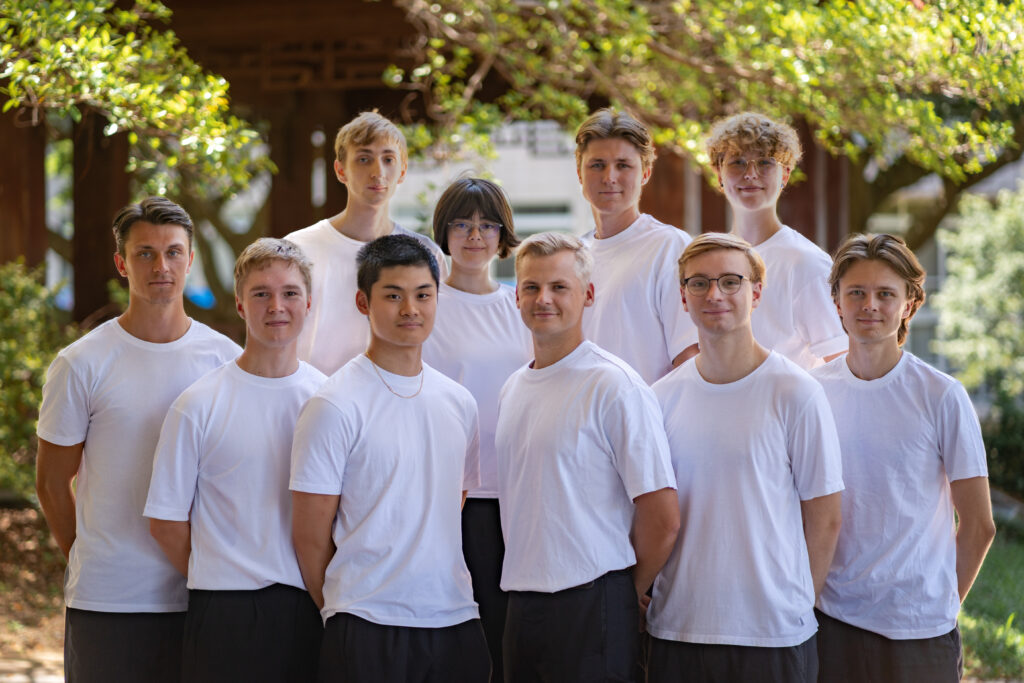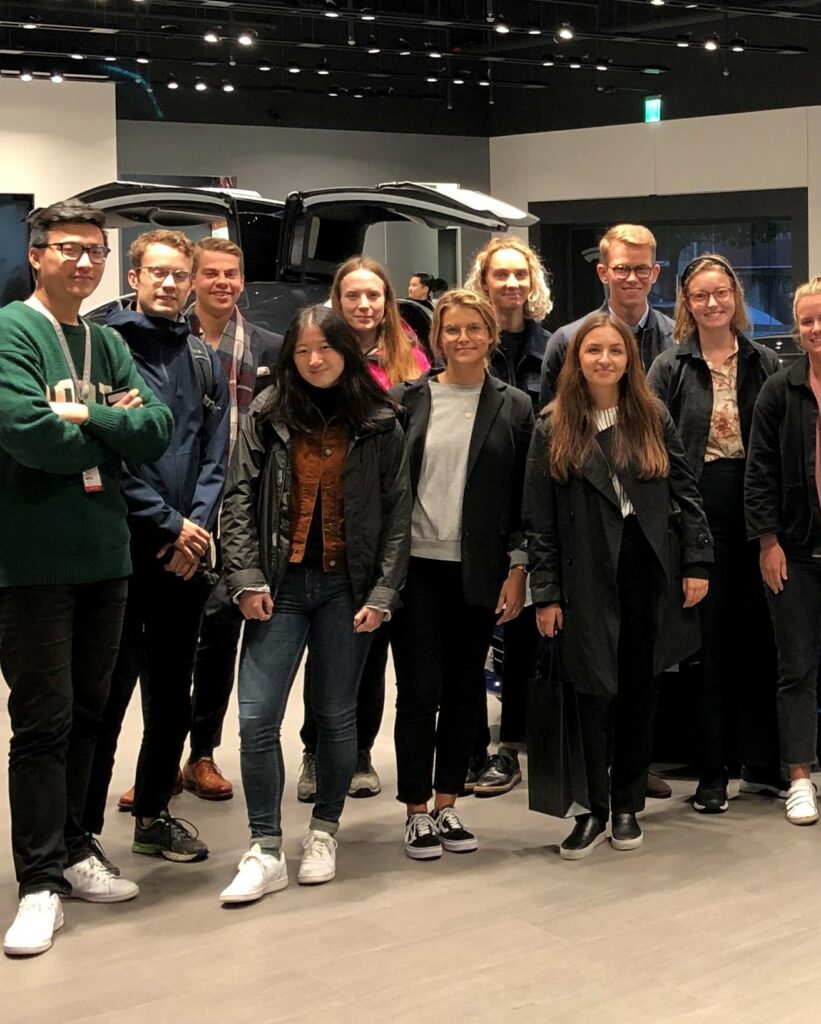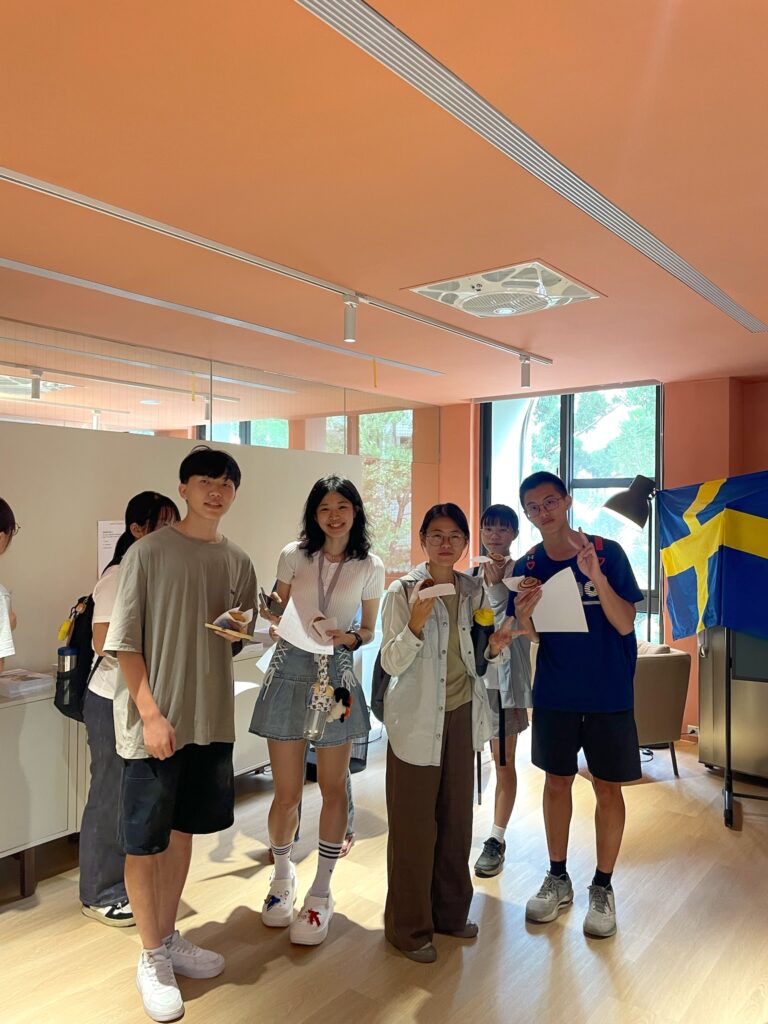
Welcome to Chalmers International Taiwan Office

The Chalmers International Taiwan Office is one of a kind. In 2003 Chalmers University of Technology gave a group of students the opportunity to start up an office at National Chiao Tung University (NCTU) in Taiwan. Chalmers International Taiwan Office enables Chalmers University of Technology and their students to position themselves in Eastern Asia, a region which has undergone an amazing economic development during the last decades.

Combined with the exchange program with NCTU the Chalmers International Taiwan Office gives Chalmers students great opportunities. Apart from the exchange studies the office members visit companies and institutions in the East Asian region on the account of the office. Every year the office also publishes two issues of the Asia Magazine. The magazine contains articles about the latest technological and economical development in East Asia as well as practical information for those interested in studying or working in East Asia.

This website contains information for those interested in taking part in the exchange between Chalmers and NCTU. It also provides contacts information about the Chalmers Asia Alumni.

For further information of our current events and pictures, please visit our Facebook page.


News

SHLGroup
December 16, 2011

CITO' s last company visit for 2011 wat at the SHL Group inTaoyuan. The company was founded by Roger Samuelsson and Matin Jelf in 1989 in Taiwan with the goal to combine manufacturing skills in Asia with international management knowledge. The company is the world largest privately owned designer, developer and manufacturer of advanced drug delivery devices.

Frank Isaksson and Steven Kaufman welcomed CITO to SHL and we listened to a presentation and got a tour in the factory, which was top modern and clinically clean. Frank that is a Chalmers graduate himself had many funny memories to share with us. He also explained SHL' s advancements during the years and talked about the business environment in Asia with great passion. We thank SHL for a very fun and interesting meeting and look forward to future cooperation.

Saamet Ekici


Lucia Celebration
December 13, 2011

On December 13th, the darkest day of the long winter, a festival of light is celebrated in Sweden. Suddenly the dark is lit up by a precession of white-clad girls and boys, holding candles in their hands and singing carols. In the very front there is Lucia, with a crown of blazing candles on her head and a red ribbon tied around her waist. The Saint Lucia day is a tradition celebrated all over Sweden, in homes, schools and in the streets! This year, the Lucia was also celebrated at the CITO office in Taiwan!

All members of the CITO staff were part of the Lucia procession and sang Christmas carols in Swedish. The event attracted a great number of NCTU students as well as exchange students who all seemed very curious about this Christmas celebration that many of the guests had never heard of before. After the singing we all had the very important julfika which consisted of traditional Christmas cakes and drinks. Everyone got to try mulled wine called glögg and saffron buns, lussekatter, and gingerbread which all are a must when celebrating a Swedish Lucia!

Foto Anders Frick


Company visit Sandvik, Taiwan
December 2, 2011

Sandvik, with more than 40 years of operations in Taiwan, is one of the first foreign companies establishing offices and production in the country. The company is present in 130 countries around the world with 47 000 employees. In Taiwan, the company has 150 employees within the business unit Sandvik Hard Materials. As one of Sweden's biggest company and a popular work place for engineers, CITO went to visit Sandvik Hard Materials outside Taipei.

Joakim Axelsson, Mathias Tillman, Scott Wu, Vincent Chiu and Per- Erik Hansson welcomed CITO to the Sandvik site in Zhong Li outside Taipei. Sandvik had prepared a half day schedule where we started off with presentations by Mathias Tillman and Sandvik's chief engineers. Next, CITO got the opportunity to see the production where the company's products were produced. As the engineers we are, a lot of questions were asked during the factory tour. The day ended with a discussion about Sandvik as a work place and working opportunities in the company. The visit gave us an insight in differences and similarities of doing business in Asia compared to Sweden. Also, we learned that "Lean production" has already been around for 30-40 years in Asia. So do not expect to meet amazed faces when introducing Lean projects. As quoted by Mathias Tillman; "Lean is a way of living in Asian business, not just a project" The visit was very fun and interesting and we thank Sandvik and look forward to future cooperation!

Saamet Ekici


Exportrådet in Tokyo
18 November 2011

The fact that Japan is one of the largest and most important markets in South East Asia makes this market alluring to foreign companies. The Swedish companies are no exception to this, and their willingness to expand their business to Japan creates needs for an advisor with experiences in doing business in Asia. This is the role of the Swedish Trade Council, which helps Swedish companies to establish its business in a country and grow within this market. During our visit to Tokyo in the end of November, we visited the Swedish Trade Council in Tokyo, where we met Andreas Olausson for a discussion regarding their business in South East Asia and how it is working in Japan being a Swede.

The Swedish Trade Council in Tokyo has a total of 16 employees, and counting with the office in Korea, with which they have much cooperation with, they are 25 employees. Andreas told us that a large part of the Swedish Trade Council's business, not only in Tokyo, is business support. Another major part of their business is the consulting part. Andreas himself, explained the consulting job within the Swedish Trade Council as being truly hands-on projects with a broad portfolio of consulting assignments. He further told us that Swedish companies have a good reputation within Japan, a lot thanks to H&M and IKEA, who both successfully have entered the Japanese market. Andreas also pointed out that it is important to know Japanese while working in Japan, since the level of English is somewhat poor. Regarding the career opportunities within the Swedish Trade Council he mentioned that the area where students or newly hired can be of most value is within sales, while working mostly towards the Swedish market. For applications, students can either send the application straight to their office in Japan, or simply go through their head office in Sweden.

Carolina Ståhlberg & Linnéa Pettersson


CITO visits Tetra Pak in Tokyo
16 November 2011

Being founded in Sweden 60 years ago, and entering the Japanese market 10 years later makes Tetra Pak not only one of Sweden's oldest and most recognized companies, but also Japan's. During our visit to Tokyo we went to Tetra Pak's head office to meet Toru Muramatsu to discuss Tetra Pak's general business in Japan, their future strategies and differences in trends between the countries where Tetra Pak operates.

Today the Japanese branch of Tetra Pak has 500 to 600 employees. 100 of the total amount of employees works at the manufacturing factory, situated in the beautiful scenery near the bottom of Mt. Fuji. Toru was sure to point out that Tetra Pak, besides being a packaging company, mainly is a printing company, since they print all the patterns on the packages they produce themselves. Furthermore, they told us that Tetra Pak focuses a lot on environmental and charitable initiatives, such as Tetra Pak's school milk program, where they are involved in supplying school children with milk. Another initiative is Tetra Pak's new recycling program, with aims to make the Japanese population increasingly aware of recycling. Regarding possibilities for internships and trainee positions they mentioned the easiest way for Swedish students is to go through the head quarters in Lund. Being able to speak Japanese is not a must; however it is seen as a great advantage, based on the fact that even though the official language within the company is English, they mostly speak Japanese within the office.

Carolina Ståhlberg & Linnéa Pettersson


BabyBjörn opens their own office in Tokyo
16 November 2011

BabyBjörn started in Sweden 1961, selling babysitters. BabyBjörn has since then grown into a global company by selling its baby products in over 40 countries. Today, the company's most popular product, the BABYBJÖRN baby carrier has been used by mothers and fathers to carry more than 30 millions of children around the world. The company has during the years broadened its product line in order to provide parents with a wide variety of safe and high quality products for babies!

BabyBjörn has been on the Japanese market for 15 years by selling its products through an agent. However, BabyBjörn has since spring 2011 chosen to set up an own office in Tokyo. We had the opportunity to meet Makoto Fukai, Head of BabyBjörn's Japan office and Naomi Kumagai, Office Manager at the Swedish Trade Council, to hear how BabyBjörn are going to expand their business in Japan. The company has in the initial stage worked closely with the Swedish trade council and it is in their office that we met them. The Tokyo office has at the moment five Japanese employees. The office collaborates closely with the Swedish headquarters and has had many visits from the Swedish management. On the question on how BabyBjörn as a Swedish company has managed to establish itself on the Japanese market, Makoto tells us that the company has by successful marketing and satisfied customers been able to position themselves as the first choice when people want to buy a babysitter. The company promotes the Swedish way of parenting where the father has a greater role and participates more compared to other countries.

BabyBjörn in Tokyo are opened for internship possibilities in the future, most likely within sales, logistics or marketing. However, Makoto mentioned that the person they hire should have basic Japanese language skills.


Carolina Ståhlberg & Linnéa Pettersson


CITO visits Scania in Tokyo
16 November 2011

Scania entered the Japanese market in 2003, accompanied by a Japanese partner. However, in the spring of 2010 they decided to go on their own and is today the only foreign company operating individually on the Japanese truck market. We met Mats Lindström, Director General Affairs & Marketing to talk about Scania's business in the country, but also about differences in working culture between Sweden and Japan.

Japan is one of the world's largest truck markets and Scania has chosen to focus on this market and are at the moment successfully establishing their Haulage truck on the market. Due to the company's new start-up, the office is still relatively small with eight full time employees. We both thought it was interesting to hear about the Japanese business culture from a Swedish person's perspective, and Mats told us that in Japan it is very important for the customer that the company is experienced. He also emphasized the importance of long relationships with suppliers and customers in order to obtain a customer impression of reliable products of good quality. According to Mats, working in Japan and managing Japanese personnel is an exciting challenge due to cultural working differences but at the same time a great experience. During his time at the office he has tried to introduce the Swedish Friday afternoon fika and addressing each other by first names. Scania Japan is in a build up phase and has a need for various professionals and this can also include students from Chalmers University of Technology. In order to work at Scania Japan a certain level of Japanese is essential. There is a possibility for working as a trainee or writing a master thesis for the company.

Carolina Ståhlberg & Linnéa Pettersson


CITO visits Scania in Taiwan
15 November 2011

The Scania assembly plant in Taoyuan with 39 employees produces an average of three trucks per day. The crowned griffin is an internationally well recognized brand and Scania is renowned for its high quality products. As one of Sweden’s most prominent exports, Scania was an obvious company visit for the CITO staff.

Ino Moberg, the Swedish Manager at the assembly plant in Taoyuan, has been working for Scania for more than 20 years and moved to Taiwan 3 years ago to set up the Taoyuan delivery center. He mentioned that one of the challenges of working abroad is the cultural differences. Although this is also one of the most interesting experiences of being a manager in Taiwan. Mr. Moberg also emphasized how important corporate values from Scania in Södertälie have been applied in the Taiwan plant. An example is the elimination of waste and constant work to keep a clean and tidy working environment. After the visit at Scania the CITO staff got homesick and took a detour to IKEA in Taoyuan for Swedish meatballs, lingonberry jam and gingerbread.

Vlad Månsson & Saamet Ekici


Company visit at the Swedish Trade Council
21 October 2011

With offices in 60 countries around the world and close relation with trade associations, embassies, consulates and chambers of commerce, the Swedish Trade Council provides services for Swedish companies which want to grow internationally

The CITO staff went to Taipei on a rainy Friday afternoon for its first official company visit in the International Trade Building. The Trade Council in Taiwan has been established since 1992 and assists Swedish companies which want to do business in the country. The organization offers work opportunities for graduates within different fields and also offers an Internship for current students. Since the company offers consulting services within Energy & Environmental Engineering, IT and Telecom, Transportation Systems and Manufacturing Industry it is a potential workplace for Chalmers Graduates seeking international work experience and career opportunities.

Vlad Månsson & Saamet Ekici


Kanelbullens dag
17 October 2011

Kanelbullens dag, Cinnamon buns day, was celebrated at the CITO-office on the 17th of October. A bakery at NCTU baked the cinnamon buns from of a traditional Swedish recipe. The buns did not look exactly like at home because pärlsocker, small pearls of sugar, cannot be found here in Taiwan so almonds were used instead. No harm in that as the buns tasted delicious and the same as at home! 70 visitors enjoyed the event.

Emma Grönlund


Opening ceremony of the Chalmers International Taiwan Office
03 October 2011

The opening ceremony for the CITO-office 2011/2012 was held on Monday the 3rd of October. Approximately 100 persons visited the office during lunchtime. The guests were able to try out Swedish delicacies such as meatball sandwiches, smoked salmon, crisp bread, gingerbread and lingonberry cordial. The Head of Office 2011/2012 Simon Fellin held an opening speech followed by a presentation about Sweden and Chalmers held by Emma Grönlund and Linnéa Petersson, responsible for Academic Exchange. The day was ended with a much appreciated Swedish game night. The Taiwanese students tried out some traditional Swedish games such as a quiz-walk, floorball and “dip the pen in the bottle”.

Linnéa Peterson and Emma Grönlund


Swedish Crawfish party with the Chamber of Commerce
01 October 2011

On Saturday the 1th of October, CITO celebrated a traditional Swedish holiday, the Crawfish party, together with the Swedish Chamber of Commerce and other Swedish companies represented in Taiwan. 


Around 50 guests attended the party which offered everything you would expect from a traditional Swedish Crayfish party. The food was outstanding and together with typical Swedish drinks and a great atmosphere it almost felt like being back home in Sweden again, but better. Responsible for the entertainment were two members of the CITO staff, Andrea Sjöberg and Carolina Ståhlberg. They kept us active with hat-making, games and Swedish singing. Viktor Hallman demonstrated a high standard of logical thinking by winning the Quiz about general knowledge. The price, a big bag of Daim candy, was generously shared by Viktor to the other participants. Thank you for a great evening! 


Vlad Månsson & Saamet Ekici


Dinner with NCTU managerial staff
29 Sept 2011

On Thursday the 29th of september, The CITO staff had their yearly dinner that NCTU staff working with international relations was invited to.

This year, NCTU was represented by the Dean as well as staff from the International Service Center and the Office of International Affairs. We all had a very good time and even though it got quite late for a Thursday night, it was a great opportunity for us to get to better get to know the people we will be working closely together with during this year.

Simon Fellin


Chalmers students arrive in Chengdu to support Volvo Cars in their new Chinese environment
31 May 2011

During our last night in Chengdu we meet with adventurous Elin Stoij and Maria Dickmark. Elin and Maria are both from Chalmers but are currently working on their master thesis in Chengdu. Last semester the two friends started exchanging ideas for doing a master thesis in mainland China due to the future potential in this fast growing economy. When we meet them they had already begun collecting empirical data in Chengdu. Their thesis will investigate how Chinese co-workers will view Volvo Cars corporate culture and the company's processes. In this way they will support Volvo Cars in highlighting important differences and expand a foundation for greater learning between the different cultures, in both directions.

Jon Borgas and Martin Johansson


CITO visits Volvo Cars in Chengdu
30 May 2011

Chengdu Car City where Swedish premium quality meets with Chinese cost control

Upon arriving to Volvo Cars' office the future plant spot is nothing but a vast area of mud and rubble. Within a few years there will however be a big plant covering these fields and these barren lands will be the workplace for thousands of people. We met with the carefully handpicked team of engineers whom will start up the factory. John-Erik Hermanson, Plant Director, expresses the thrill of starting up a plant from scratch. He adds that Volvo Cars has not done this since the mid sixties, when Volvo opened the plant in Torslanda followed by another plant in Ghent. This large scale project truly demands expertise and one of the employees admits that they are really good at what they do. One of the Chinese managers also tells us that he chose Volvo Cars because of the great growth potential of the company and adds that many Chinese senior engineers like him have experience in setting up plants. Together the team will benefit from the lower costs of manufacturing in China while maintaining top quality premium cars for the growing demand.

Jon Borgas and Martin Johansson
Volvo Cars Chengdu plant construction site, photo by Martin Johansson.


ABB in Chongqing
27 May 2011

Since 1998 ABB has had production facilities in Chongqing. We met Magnus Strâˆö∂m, president of ABB Chongqing, to talk about ABB and see their production, but also about living abroad.

ABB makes a wide variety of products in different places all around the world, and in Chongqing they have specialized in big scale transformers. Transformers from the factory in Chongqing were used in the famous Three Gorges Project, the building of the world's largest dam. From the start in 1998 most of the products produced were made for the Chinese market, but the recent years have been more export-oriented. Magnus mentioned the increasing competition from Chinese manufacturers as the reason why ABB have to be one step ahead and stay innovative.

Being foreigner in China for several years, Magnus have experience of the Chinese culture and integrating with the Chinese people. As foreigners are so few in China, especially in Chongqing and eastern China, foreigners are very well treated. In our short visit in Chongqing we had time to experience this several times.

Jon Borgas and Martin Johansson


Volvo Cars in Chongqing
26 May 2011

In Chongqing, "Right at the Heart of China", Volvo Cars have a joint venture with the Chinese car-manufacturer Changan. We were there and met the Volvo employees and had a tour by the production line.

We met Volvo's Program & Operations Director Jâˆö∂rgen Hâˆö•kansson, who told us about Volvo's operations in Chongqing. Volvo Cars in Chongqing is part of CFMA, Changan Ford Mazda Automobile Co., Ltd., originally sharing production with Ford and Mazda in the same facilities. Ford started this joint venture with Changan in 2001 and the first Volvo car produced in China, the S40, started production in Chongqing by 2006. Today not only the S40 is made here, but also the S80L, a longer version of the S80 especially made for the Chinese market. You can read more about Volvo Cars in Chongqing in our new Asia Magazine 17.

Jon Borgas and Martin Johansson


Swedish Trade Council Shanghai
23 May 2011

With a very nice view over modern Shanghai Van Houng, Country Manager East China, works for the Swedish Trade Council.

When in Shanghai we met Van Houng, former CITO and Chalmers alumni. Van gave us his view of Shanghai and China, and what the Swedish Trade Council does for Swedish companies wanting to establish themselves in China. The council have grown a lot the last years, from around 20 employees four years ago to around 40 today. Van also told us that he recently had visits from the Swedish minister of commerce, but also from the Swedish King and the crown princess. China's growth clearly is of interest for Swedish companies and the Swedish government.

Jon Borgas and Martin Johansson


The new Volvo Cars headquarters
24 May 2011

CITO visits Volvo Cars new headquarters in the outskirts of Shanghai, and meet with the Vice President of Product Development, Lars Nyborg.

Northwest of the Shanghai city centre lies the Jiading district. The area is already a hub for some car manufacturers and their suppliers but will in the future expand to become an even more important region for the Chinese car industry. Here Volvo Cars are expanding by setting up a new HQ for the Chinese market. The Vice President of Product Development Lars Nyborg recently arrived joining several other expatriates and local employees at the new complex in Jiading. Together they are building the new organization using the main HQ in Gothenburg as a model. Upon writing this the organization is growing in a rapid phase and the empty spaces in the complex should soon enough be filled with engineers.

Lars showed us around the complex and we were happy to see two divisional managers facing each other in a ping pong duel during the lunch break. The atmosphere is relaxed and welcoming.

Jon Borgas and Martin Johansson
Jon and Lars having lunch in the canteen.


Oriflame in Shanghai
23 May 2011

In Shanghai we had another meeting with a Chalmers and CITO alumni, Daniel Hahn who is sales manager for Oriflame in Shanghai.

Oriflame is one of the largest direct sellers of cosmetics in the world, today active in 62 countries. As a direct seller Oriflame use consulars, ordinary people selling Oriflame's products for a provision, instead of using traditional resellers and salesmen. Daniel has been working for Oriflame in one and a half year and been a critical part of the successful launch of the Oriflame's Wellness products in China. With Wellness Oriflame expanded their reach from only cosmetics to also include nutritional products. You will be able to read more about Daniel and other Chalmers alumni in next issue of Asia Magazine's special alumni article.

Jon Borgas and Martin Johansson


Precimeter in Shanghai
20 May 2011

For an upcoming Asia Magazine article about Chalmers alumni in China, we visited Elin Lidâˆö©n, General Manager at Precimeter in Shanghai, for an interview.

After studying at Chalmers Elin went to Shanghai for Chinese language studies for a year. The language studies partially gave Elin the opportunity to start up a representation office from scratch for Precimeter in Shanghai two years ago. Precimeter is a Swedish based company that creates solutions for aluminium processing companies all over the world. Elin told us a little about her job and how it is to live in Shanghai. As being responsible at Precimeter she is able to travel in a lot in China when doing business, so far she has been in 20 of China's provinces. Being westerner but also female gives her a lot of special attention by customers, making her a very familiar face in the aluminium business.

Jon Borgas and Martin Johansson


Volvo Cars Sales Office in Shanghai
19 May 2011

When visiting Shanghai CITO had the opportunity to visit Volvo Cars' sales office. There we met the two expatriates Ulf Modig and Andreas Gustavsson.

Volvo's office in Shanghai offers functions such as sales, marketing and service for the Chinese market. Ulf has been working in the office a bit more than a year while Andreas had worked from first of April this year. They described the Shanghai market and their working environment as very energetic and exiting. Working close to the end customer both Ulf and Andreas often faced different issues requiring the use of their expertise in varieties of ways in order to provide the new Chinese customers with top satisfying solutions.

dreas' tip to Chalmers students wanting to work in Shanghai is to search for larger Swedish companies expanding in China, as many opportunities should be with these companies.

Jon Borgas and Martin Johansson


Visit by Foundation for International Cooperation in Higher Education of Taiwan
13 of June and 26 of May

Representatives from FICHET (Foundation for International Cooperation in Higher Education of Taiwan) came to visit National Chiao Tung University to get to know more about all different of the internationalization efforts by NCTU. FICHET is a non-profit which the Taiwanese government has given the responsibility to promote cooperation between Taiwanese and Foreign Universities. FICHET represents 114 public and private universities in Taiwan who cooperate in making sure Taiwan is an attractive destination for international students. The representatives met not only with the NCTU administration, they also met directly with some of the international Students. We got the opportunity to show our office and present the role of Chalmers international Taiwan Office in contributing to the internalization efforts of Chalmers and National Chiao Tung University.


Ericsson in Hong Kong
May 13 2011

Greeted at the entrance by Michael Lee, the CTO for Ericsson in Hong Kong and actually a former student at Chalmers University of Technology, he held a minor PowerPoint presentation in the conference room about their function in Hong Kong and their relation to the neighbouring branches in Asia. He explained the Corporate Structure and the joint venture together with ST Ericsson and Sony Ericsson and how services and products are being distributed between these companies.

Ericsson in Hong Kong had about 100 employees in 1984 and has today nearly tripled its staff number. Ericsson has about 80000 employees worldwide, with the main part of its R&D staff located in Sweden and mainland China.

What differentiates Ericsson from its competitors is that the 10 regions it has set up is a result of cultural, not geographical, reasons. Michael Lee explained that 40% of the mobile traffic is being handled by the switches Ericsson has set up.

It was very interesting to see in what rapid pace the mobile phone technology has evolved, and to hear how bright the future still is. Ericsson is in the lead in the next generation cell phone technology, LTE/4G, as well. Nowadays Ericsson's biggest competitor is the Chinese company Huawei, their market share is getting bigger and bigger, but as can be seen to right they still haven't caught up with Ericsson. Ericsson is also expanding their business area to stay competitive. Before telecom operators usually had personnel running the networks bought by Ericsson, but now Ericsson is taking over this market as well.

Kristofer Jovanov and Linus Hallberg
The Chinese giant Huawei still can't keep up with Ericsson.
(http://www.mobilenewscwp.co.uk)


Swedish Chamber of Commerce in Hong Kong
May 12 2011

The Swedish Chamber of Commerce is a non-profit organisation, with its main objective to create a network consisting of workers in Hong Kong that in some way have relations to Swedish Businesses. In comparison to the Swedish Trade Council they receive no funding from the Swedish Government and make no consulting jobs for its member companies. Today they have approximately 170 member companies, however not all of them are Swedish.

Mâˆö§rta Lang, the Marketing Manager at the Swedish Chamber of Commerce, explained about their relation to their members and how they host meetings and gatherings for the members to exchange ideas, knowledge and to provide a comforting atmosphere of the "Swedish Spirit" for those that are highly nostalgic.

They host around 80 events each year, but also provides the opportunity for members themselves to host event in special occasions.

There was a special branch called YP, that is Young Professionals, with the same purpose as the regular. However the events organised for YP are somewhat more customized for the younger generation of entrepreneurs and students.

Kristofer Jovanov and Linus Hallberg


SKF Beijing
May 9 2011

At the SKF office in the central districts of Beijing Mr Hoper Ran, Maintenance Products Manager greeted us kindly and showed us to the conference room. The history of SKF's existence in China is very unique. SKF established its first office in Shanghai 1912, just a couple of year after it's founding in Gothenburg. Having established several offices at major cites, the company was forced to withdraw its business due to the political turmoil in the country following the WW2. 1988 it returned to Chinese soil via Hong Kong and has since then established offices and production lines all around the country.

A major topic during our discussions with SKF was the wind power development in China. Mr Hoper Ran was kind enough to invite a governmental expert in the field of wind technology, Mr Yao Xiaoqin, who answered questions requiring more data on the sheet.

Since the government set up new requirements for reduced carbon oxide emissions the market of wind technology has boomed to record numbers allowing China to take the lead as the country with the highest production capacity of "green energy sources". SKF has an important role to play when the demand for wind turbine increase since they supply Vestas, GoldWind and other major wind turbine manufacturers with the required bearings and lubrications.

They day after we, together with Mr Hoper, paid a small visit to Vestas Generator Factory in Tianjin. There we had the chance to further expand our knowledge about the business of wind turbines, the market demand, supply chain, competitors and so forth.

Kristofer Jovanov and Linus Hallberg


Tetra Pak Beijing
May 9 2011

Taking the MRT to Beijing Economical Development Area (BEDA) we visited Tetra Pak's production plant. This plant was established in 2005 and is one of the largest Tetra Pak production plants in the world. The production capacity is more than 16 billion packages/year.

Ms Mary MA kindly gave us a presentation of the production process dividing it into three different steps: Printing, Coating and Slitting. The sanitation and safety of the production plants was utterly important and we had to wear specially designed suits and caps and furthermore watch a safety video before entering the plant. The size of the plant was very impressive. The printing machines, cutting machinery and the slitting machinery were imported from Sweden, USA and Italy respectively. The paper rolls used for the process were imported from Sweden and Brazil. However this facility only produces processed "paper rolls" for their OEM's, where the OEM's in turn shapes the rolls into small packages and manages the filling process. One can also add that the filling machines located at the OEM's are also manufactured by Tetra Pak which add further value to the company. Even though Tetra Pak has lot of facilities abroad it still contributes a lot to Swedish export, both machinery and raw material are exported to China.

Kristofer Jovanov and Linus Hallberg


Groupon Enters China
May 10 2011

The world wide spread Groupon-concept of connecting offline businesses with online users is now exploring the huge market in China. Groupon is an intermediating company who does wholesales via internet. Since the domains groupon.cn and groupon.com.cn were already registered by a Chinese competitor, Groupon chose to launch their Chinese version as gaopeng.com. Gaopeng started up in Beijing in February this year and now has a couple of hundred employees, a number hard to estimate for the Vice President for Business Operations, Tim Yi He, since they are expanding rapidly right now.

Even though the business seems to be booming, there are some difficulties running it. In addition to the other Groupon start-ups in China mentioned above, Tim mentions that they need to work a lot with investigation and preparatory work to get licenses to proof the authenticity of the products, tasks which are not required to the same extent in other countries.

Groupon exists in many countries, such as Sweden and Taiwan, and often has different auctions for different cities and regions. If you are futher interested, please check groupon.com for exact locations.

Marcus Larsson and Josefine âˆöÑlmegran


CITO Explores Swedish Environmental Technique in China
May 12 2011

During our trip to Beijing we visited the Center for Environmental Technology, CENTEC, at the embassy of Sweden. Their task is to coordinate the Swedish Government's tools and resources to promote Swedish environmental technology cooperation with China.

CENTEC's main assignment is to introduce Swedish technology and know-how to Chinese interested cities, companies or the government in order to make it easier for the Swedish companies to establish their business in the Chinese market.Since the start in 2007, there have been many successful stories of Swedish environmental companies getting contracts in the growing Chinese market. They told us that Swedish technique, especially in the environmental field, has a good reputation in China. One of the biggest environmental projects in China for the moment is the eco-city Caofeidian. It's a city when it's completed in 2020, will have up to one million residents. Through CENTEC's close cooperation with the Chinese government, including sending chinesedelegations to the Swedish eco-city HammarbySjâˆö∂stad, several Swedish companies got contracted to design the city. One of these companies was Sweco, which we also visited during our trip to Beijing.

The CENTEC office in Beijing has five employees, mainly working with finding opportunities for Swedish companies in governmental or private environmental projects in China. Since they have a new big office they have space for students doing their master thesis. If you are interested in writing a master thesis in the environmental field in one of the worlds fastest growing markets, contact Corporate Relations at CITO for more information.

Marcus Larsson and Josefine âˆöÑlmegran

The Swedish Pavilion at Expo Shanghai


CITO Explores the Techniques Behind Social Networking
May 10 2011

During our trip to Beijing our first visit was at P1.cn, a private social network. Membership in this network can only be obtained through invitation which can be received by an invite from a friend or by getting photographed by a P1 street style photographer. The purpose of this online club is to connect people with similar interests either by the online community or by participating in their events.

Let's begin where it all started. Four people, Swedes and Chinese, engineers and economists, decided to start up a social network business in China four years ago (in 2007). We found this an interesting fact and wanted to know more about it. After two years the number of registered members was 300,000, a number which now has increased to about 1 million. Still, Mikael Gustavsson (CTO), informs us that their goal is to attain 20 million members by year 2020. Mikael has a Master of Science in Computer Engineering from KTH in Stockholm, Sweden, and has worked for P1 for 3 years.

The company has about 40 employees at their headquarters in Beijing, the majority of whom works within the product department. This department is also interested in cooperating with Chalmers students and possibly work out and idea for a master's thesis or an internship. They are mostly interested in web developers but can also consider people with general knowledge in programming, databases and algorithms. For more information about your opportunities to join P1, please contact Corporate Relations at CITO by emailing johan.annell(at)chalmers.se or linus.hallberg(at)chalmers.se

Marcus Larsson and Josefine âˆöÑlmegran


CITO Explores Caofeidian, the New Eco-City in China
May 12 2011

To get a closer presentation about the exiting eco-city Caofeidian, we made a visit to Sweco´s office in Beijing

Sweco is a Swedish provider of consulting engineering worldwide with a focus at architecture and environmental technique. Because of their good reputation in the environmental field they were trusted to build the Swedish pavilion to the expo in Shanghai. The Swedish pavilion's main focus was to promote Swedish environmental technique. This is especially important in China were several eco-cities are planned to be built and new solutions are built in to existing cities to lower their environmental impact.

One of the biggest planned eco-cities is Caofeidian, 250kilometres east of Beijing. The Chinese government choseSweco to do the main design of the city, mainly because they already had experience of designing, in many eyes the best functioning eco-city in the world, HammarbySjâˆö∂stad. We met aSweco architect in their office in Beijing to get a better picture of this huge and futuristic project. He explained that a new industrial area has been built up around a new harbour in the East Chinese sea. In order to get the worker somewhere to live the government planned to built a completely new city with as low environmental impact as possible, 50 kilometres away from the industrial park.

Sweco's part of the planning is to do the overall planning for the first 30 km2, an area that will be totally climate neutral. Totally are over 120 people from Sweco involved in the process of doing the overall design as well as more detailed planning of the buildings. The office in Beijing only has 3 employees, so most of the job is made in the head office in Stockholm. The goal is to have the city built up before 2020 with a population of over 1 million people.

Josefin âˆöÑlmegran and Marcus Larsson


CITO visits Enspyre
13 May 2011

Enspyre offers a multitude of services for their customers, from a virtual office to telemarketing. CITO had the pleasure to meet president and CO-founder Elias Ek for a chat when visiting Enspyre in May.

Entrepreneur Elias Ek founded Enspyre almost nine years ago and he told us a little about doing business in Taiwan, which he thought were surprisingly simple. Elias told us about Enspyre's own training program in marketing, co-operating with several Swedish universities, created as a result of Enspyre's demand for competent marketers. This marketing training program is open for Taiwanese as well as foreign students and has about ten participants each time it goes. There are a lot of thing going around Enspyre right now, they also hold Swedish courses for Taiwanese wanting to know more about the Swedish language as well as the Swedish culture. Visiting Elias and Enspyre wasvery inspiring, and CITO wishes themall well in the future!

Jon Borgas


Cito explores Hsinchu Science Park
6 May 2011

This week some of us went for a guided tour at Hsinchu Science Park exploration Museum, a small standard factory which used to be leased to small companies but now has been converted into a showcase for products from Hsinchu Science Park.

Hsinchu Science Park is a gigantic development where a large part of Taiwan's high technology companies are located and has been an engine driving Taiwan´s export success since it opened in 1980. Although you may not have heard of the Science Park, you are probably using products from it right now to read this blog. The biggest industry is IC(integrated circuits) which are critical components of computers and cell phones, and the science park is home to both the 1st and 2nd largest IC-foundries. Many companies work in the Value chain surrounding these foundries with designing or testing integrated circuits or building products using them such as laptops, hard drives or WLAN-products. Since the park is getting crowded it already has several satellite parks ready or under development who focus on different industries such as biotechnology or opto-electronics.

One invention which to our knowledge has not reached Sweden but is everywhere in Taiwan is the traffic light which not only tells you how long time you have to wait to cross the street but also tells you to hurry up when crossing it

Johan Annell


Visit at Ericsson Taiwan!
29 April 2011

CITO visited Ericsson in Taipei and got an introduction of Ericsson's business and future plans in Taiwan.

Ericsson Taiwan currently holds 210 employees, a few of the Swedish, and has been in business in Taiwan from 1987. Ericsson in Taiwan serves a wide range of companies, including the three larger telecom companies in Taiwan, Chunghua, FarEastOne and Taiwan Mobile. CITO got an presentation about Ericsson's current situation in Taiwan and what is going on in the Business.

Jon Borgas


CITO takes a closer look at IT and e-learning in Malaysia
Published 23 of April 2011

Last week we went to Kuala Lumpur to visit Swedish companies working with Information Technology and take a closer look at how Malaysia is using e-learning to give more people an opportunity to take university degrees and gain skills the job-market requires.

We started the journey by visiting some of the most interesting Swedish companies who have a presence around Kuala Lumpur to hear more about what they do and look for opportunities to cooperate with Chalmers students for thesis work or internships. The companies we visited were:

Digital Route, A software company providing mediation solutions for telephone companies to better integrate equipment and software from many different manufacturers to better manage their networks and provide a more customized user experience.

Ericsson, The world's leading provider of equipment and solutions for telecommunications networks.

Free2Move, who manufacture and design innovative products using wireless technology such as RFID and Bluetooth to make consumer electronics for sports as well as doing industrial solutions for goods tracking, security and other applications.

Paracell, who provide consulting and project services to support the roll-out and maintenance of telecommunications networks in Sweden and emerging markets.

If you are interested in doing a master theses in Asia there are plenty opportunities at companies CITO have visited, don't hesitate to send us an email at info(at)asia.chalmers.se !

The last stop on our journey was Asia e University, a university using the internet to provide working people in several Asian countries with an opportunity to boost their skills and get a degree at an affordable price.

If you want to read the full story of our trip to Malaysia and why it may make sense economically to block YouTube, read our travel story here.

Johan Annell and Linus Hallberg


International Week: Sweden!
12 April 2011

CITO represented Sweden when NCTU held international week to promote cultural exchange between students. 35 participants from all around the globe, mostly Taiwan, but also Jordan, Mongolia and Guatemala came to hear more about Sweden.

Did you know IKEA was from Sweden? Or did you know about the Swedish festival "Midsummer"? These and many more questions where answered when it was CITO´s turn to exchange cultural experiences at NCTU´s International Week. CITO held a presentation about Sweden but also talked about Gothenburg and Chalmers.

Jon Borgas


NCTU Anniversary
9 April 2011

CITO had a food stand at NCTU's 115th birthday. Chocolate balls and cinnamon bulls together with Swedish lemonade where much appreciated.

CITO had a food stand, but also a "Swedish cafâˆö©", at NCTU's anniversary. In the cafâˆö© the visitors could read Asia Magazine and relax from the surrounding stress. The Swedish pastries were much appreciated and at the end of the day we had sold 150 cinnamon buns and 50 chocolate balls.

Jon Borgas


CITO visits Tetra Pak in Taiwan
Published 29 of March 2011

Last Friday most of the CITO staff participated in a visit arranged by Swedish Chamber of Commerce to Tetra Pak's factory in Taiwan.

Tetra Pak is one of Sweden's greatest export success with a long tradition of being a global company providing solutions packaging solutions for the food industry. Their most famous product maybe their Carton packages for dairy products which started it all in 1951 when Swedish Inventor Dr. Ruben Rausing after years of development had come up with a hygienic and cheap alternative to milk bottles made of glass. In Linkou township outside Taiwan the company has a factory which produces carton packaging for several Taiwanese beverage brands. A large portion is made for export, right now the factory is preparing to aid the Japanese branch in coping with disturbances due to the recent earthquake disaster. At the factory we also heard about how Tetra Pak has worked to increase awareness of that their products are recyclable, on such effort is sponsoring benches in public parks made of recycled cartons. After going on a guided tour in the factory and seeing how the printing is done, we had lunch at the factory canteen and then had to say goodbye and thank you to Swedish Chamber of Commerce and Tetra Pak for this great trip.

Johan Annell


Company visit at SKF, Taichung
Published 24 of March 2011

Friday 18 March CITO visited SKF in Taichung, 95 km south of Hsinchu. We got an introduction to SKF in Taiwan and Asia and were also shown around in the facilities.

Taiwan was the second location the Swedish bearings manufacturer entered in Asia, after Shanghai. Today the company has four Sales Branches in Taiwan, two in Taipei, one in Kaohsiung and the one we visited in Taichung.

The SKF office in Taichung is a sales branch and solution factory, i.e. a place where parts mostly manufactured in Europe is being modified to meet local costumer needs. It has 24 employees.

We were received by Richard Kwok from Hong Kong who has worked for SKF back and forth since 1989. He has been at the Taichung office since 2003 where he is the manager today. He told us about the company's development in Asia the recent years. Before, SKF mostly sold its products in Europe, but now Asia stands for almost an equally big part of the sales. And still Asia is a growing market for SKF: only during the upcoming year, SKF will need to hire 1000 new co-workers in the region.

Richard showed us around in their modern buildings among the rise fields of Taichung countryside. We got to see the service centre where the modifications are being made, the testing room and the storage.

When asked about the opportunities for doing master theses or internships at SKF in Taiwan, Richard said that "every proposal is interesting." If you have a good idea and would like to give it a try, contact Corporate Relations at CITO, and they can help you in contact with Richard.

Oskar I. Stenriker
Richard showing us some SKF bearings.


First event of the semester: Movie Night!
Published 17 March 2011

Yesterday CITO arranged the first event of the new semester – a movie night. The movie showed was Mamma Mia – the Movie with Chinese subtitles.

11 guests attended the event at our office, both Taiwanese and exchange students from Finland, Guatemala and Ukraine. Before the movie, I and Jon held a short presentation telling the story of ABBA. Not everyone was very familiar with the music of ABBA previously and only two had seen the movie before. Tina Huang, Bella Huang and Angel Liu, all from Taiwan, belonged to those who had not, however they all found the movie very good. “The plot is very special” said the girls, “it has lot of surprises.” When asked about their favourite ABBA-songs Tina said SOS. “Mine is I have a dream” said Bella while Angel preferred Money money money. It was the first time for all three of them to visit CITO. Also many of the others expressed their amazement of ABBA. It seemed like we managed to make a good ABBA impression on the guests indeed.

Oskar I. Stenriker
Tina Huang, Bella Huang and Angel Liu (fr. left to right) all enjoyed the movie.


CITO present at the APAIE Conference
10 March 2011

In the beginning of this semester I had the pleasure to represent Chalmers and our office together with Dr. Gustavo Perrusquâˆö≠a at the APAIE Conference and Exhibition of 2011, held in Taipei.

The APAIE (Asia Pacific Association for International Education) aims to increase international academic collaboration. Together with Dr. Perrusquâˆö≠a and the Associate Dean of International Affairs Dr. Jia-Lin Tsai we managed to provide a very successful session where we covered everything from how our unique partnership with NCTU all started, to where we are now with two overseas offices run by students. During the session I noticed how eyes lit up among the crowd and afterwards people were queuing up in line to have a chat before the next session was bound to start. It was indeed a pleasant experience!

Martin Johansson


Floor Ball 1.0
17 November 2010

International and local students gather for some nice games of floor ball.

Floor ball is quite unknown to both many of the local and international students at NCTU. Floor ball is a popular sport in Sweden and the Swedish team usually performs very well during championships (maybe because not so many other countries play floor ball). CITO want to offer another glimpse of Swedish culture by teaching students in NCTU how to play the game. The first floor ball event was held the 17:th of November and at least 20 international and local students participated in the exercises and tournaments.

Martin Johansson


VIP Lunch
27 October 2010

CITO meet with the President of National Chiao Tung University.

The 27/10 CITO hosted a VIP lunch at Cafâˆö© Grazie downtown, Hsinchu. We were very fortunate to meet with the NCTU key personal regarding our collaboration. The President of NCTU Prof. Chung-Yu Wu, the Dean of International Affairs Prof. Shang Hwa Hsu, the Associate Dean of International Affairs Prof. Jia-Lin Tsai and two directors of International Admission Prof. Jill Pan and Miss Amy Chen all joined us for Italian food and coffee. It was indeed a true pleasure and a good opportunity for us to bond. All the ten of us were present to introduce ourselves. Everything went really well and the Dean of International Affairs took the opportunity to invite us for dinner in Taipei for further discussions, and Miss Amy Chen offered us a tour around Hsinchu.

Martin Johansson


Swedish Movie Night
20 October 2010

Around 40 guests gathered in the office to watch the Swedish movie "The Girl with the Dragon Tattoo".

The movie is based on the bestseller series by Stieg Larsson and many of our guests had also read some of the books already. The plot is filled with excitement but it too has some scary parts that could be a bit shocking. However, the movie got a good grade from our guests and after the movie we continued eating snacks and mingle.

Martin Johansson


Cinnamon Buns Day
6 October 2010

Yummy! The Swedish cinnamon buns were a great success!

The Cinnamon Buns Day was celebrated the 6th of October with the purpose of offering a taste of Swedish culture and make new friends. In the end of the day all 150 buns were finished and the Head of Office didn't even get to taste one!

Martin Johansson
Students stopping by to have a taste of the Swedish buns!


Swedish Game Night
30 September 2010

At 8 pm the evening of the 30:th of September CITO invited local and international students and guests for an evening of Swedish games!

The Swedish Game Night was initiated with a classical Swedish competition called "Tipspromenad" where the guests competed individually, and of course there was also a carefully selected price for the winner! After the Tipspromenad we teamed up mixing students from different backgrounds and played other typical Swedish party games. The games were ended by a very exciting relay race.

Martin Johansson


Top: Nicolas Di'Tullio and Zizuo Sakthes eating candy string during the relay race.
Below : Students gathering around one of the tricky questions during the Tipspromenad.


The Annual Opening Ceremony
30 September 2010

We are now open after the summer holidays, and with a new team of exchange students!

The opening ceremony was held the 30:th of September from 12:15 to 13:30. The aim was to introduce the new staff and inform about Chalmers and NCTUs special collaboration program. The ceremony was a great success! We counted up to 110 people inside our office at one point. Swedish snacks and beverages were served to let our guests have a taste of Sweden. The Head of Office held the opening speech together with the Dean of International Affairs Dr. Hsu. Two officers then introduced Sweden and Chalmers with info highlighting cultural, historical and fun facts. We were also very lucky to have our friends Vivian and Eric (both NCTU-Europe alumni) to provide their experience from studying at Chalmers!

Martin Johansson


The Dean of International Affairs, Dr.Hsu and the new Head of CITO Martin Johansson.
Address: National Chiao Tung University, 1001 Ta-Hsueh Rd., Hsinchu, Taiwan 30010, R.O.C. Telephone: +886 (0)3 5737369